You Got the Lead. Now Don’t Ruin It.
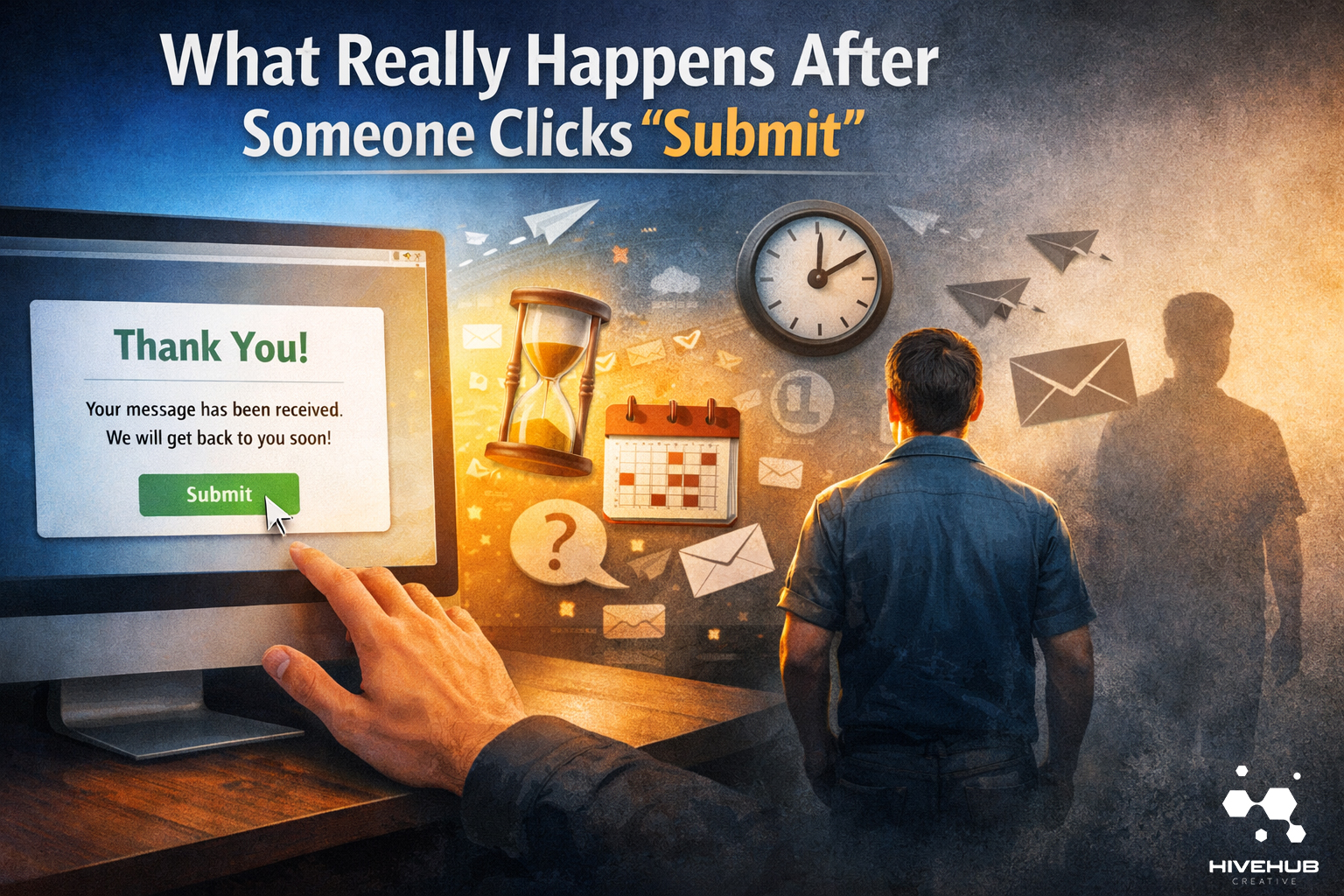
Most businesses put a lot of effort into getting people to fill out their contact form. Ads are running, SEO is humming along, the website looks sharp. Someone finally types their name, email, maybe even a heartfelt message… and clicks submit.
And then?
For many companies, the answer is uncomfortable silence. Or worse – an automated reply that feels like it was written by a bored robot in 2009.
What happens after someone fills out your contact form matters more than most businesses realize. It’s the moment where interest turns into trust, or curiosity quietly disappears forever.
The Contact Form Is Not the Finish Line
A contact form is often treated like the end of the journey. Lead captured. Mission accomplished. High-fives all around.
In reality, it’s the start of a very short countdown. The person on the other side is still warm. They’re still thinking about their problem. They’re still deciding whether you’re the right solution – or just another tab they’ll close.
This is where many businesses lose people without ever knowing it. You might have nailed the design, the messaging, and even the traffic strategy, but if the follow-up experience feels slow, confusing, or impersonal, that lead quietly cools off.
This is the same reason why even beautifully designed websites can struggle when they’re built without converting visitors into customers as the core goal.
The First Few Seconds After Submission
Right after someone submits your form, one simple question pops into their head: “Did that actually work?”
If the confirmation message is vague, generic, or missing entirely, doubt creeps in fast. A clear, human confirmation instantly reassures them that their message landed where it was supposed to.
This doesn’t require fancy animations or clever copywriting gymnastics. It just needs clarity. A short message that confirms receipt, explains what happens next, and sets expectations already puts you ahead of most competitors.
When this step is missing, it creates the same friction people feel when websites are cluttered, confusing, or poorly structured – issues that quietly destroy trust and conversions long before a sale ever happens.
The Follow-Up Gap Most Businesses Ignore
Here’s where things usually fall apart.
Someone fills out your contact form on Monday morning. You reply on Thursday afternoon. Or next week. Or never.
From the business side, it feels reasonable. From the user’s side, it feels like being ignored.
Fast follow-up doesn’t mean being aggressive or desperate. It means respecting the moment of intent. Even a simple acknowledgment email that sounds human – sent quickly – keeps the conversation alive.
Speed matters because people don’t fill out one form and patiently wait. They compare. They browse. They talk to competitors. And if your response arrives too late, it doesn’t matter how good it is.
This is where contact forms quietly connect to the larger idea of guiding people through a process instead of hoping for the best, which is exactly why turning interest into structured steps that lead somewhere isn’t just a marketing concept – it’s a survival tactic.
Automation Isn’t the Enemy – Bad Automation Is
Automation gets a bad reputation because it’s often done poorly. Cold language, stiff templates, and emails that scream “this was sent to 5,000 people today.”
But smart automation doesn’t replace human interaction. It supports it.
A well-written automated response can acknowledge the message, confirm next steps, and let the person know when they’ll hear back – without pretending to be something it’s not. Honesty beats fake friendliness every time.
The irony is that businesses obsess over traffic and lead generation, then completely neglect what happens once someone actually raises their hand. That disconnect is one of the main reasons content marketing brings in leads but doesn’t always turn them into real conversations.
Trust Is Built After the Form, Not Before
Most brands focus heavily on building trust before the contact form. Testimonials, visuals, messaging, and branding all do their job.
But trust is reinforced – or broken – after submission.
If the response feels rushed, generic, or salesy, it creates doubt. If it feels thoughtful, timely, and clear, it confirms the decision they just made to reach out.
This moment is where brands either act like professionals who value communication, or like companies that are “too busy” to care. And people notice. They always do.
Consistency here matters just as much as it does on social media or branding, because showing up once and disappearing afterward sends the wrong message – something that mirrors why consistency often outperforms creativity when it comes to trust.
The Silent Leads You Never Hear About
The most dangerous leads aren’t the ones who say no.
They’re the ones who disappear.
No reply. No feedback. No second chance.
Most of the time, they didn’t hate your offer. They just didn’t feel engaged enough to continue. A slow response, unclear next steps, or a cold follow-up is often all it takes for someone to move on without a word.
When businesses review their lead quality, they rarely look at the experience after the form. But that’s often where the real problem lives.
Final Thoughts: Treat the Form Like a Conversation, Not a Trophy
A contact form isn’t a win. It’s an invitation.
What happens next determines whether that invitation turns into a real conversation or quietly expires. Clear confirmation, timely responses, and human communication aren’t “nice extras” – they’re essential.
If your contact form is generating leads but real conversations aren’t happening the way they should, you’re likely losing opportunities after the click. HiveHub Creative helps businesses realign their contact forms, follow-ups, and messaging so interest doesn’t fade once someone reaches out – and form submissions turn into meaningful conversations that actually lead somewhere.
Let’s make sure the moment someone reaches out doesn’t become the moment they lose interest.